How to Install a Truck Bed Tool Box | Step-by-Step Guide
If you use your truck for work, travel, or daily hauling, you already know how quickly the bed can become disorganized. Tools shift, smaller items get lost, and valuable equipment stays exposed to weather and theft.
That’s where a
truck bed tool box becomes essential. It helps you keep everything secure, organized, and easy to access. But to get the most out of it, proper installation is key.
This guide will walk you through how to install a truck bed tool box, step by step, along with expert tips, common mistakes, and practical insights to help you do it right the first time.
Why Proper Installation Matters
Installing a tool box for trucks isn’t just about placing it in the bed, it directly impacts safety, durability, and usability.
| Factor | Proper Installation Benefit | Poor Installation Risk |
|---|---|---|
| Stability | No shifting or rattling | Movement during driving |
| Tool Protection | Secure and weatherproof | Damage from impact or moisture |
| Truck Safety | Even weight distribution | Bed damage or imbalance |
| Longevity | Long-lasting performance | Frequent loosening or wear |
Types of Truck Bed Tool Box Installations
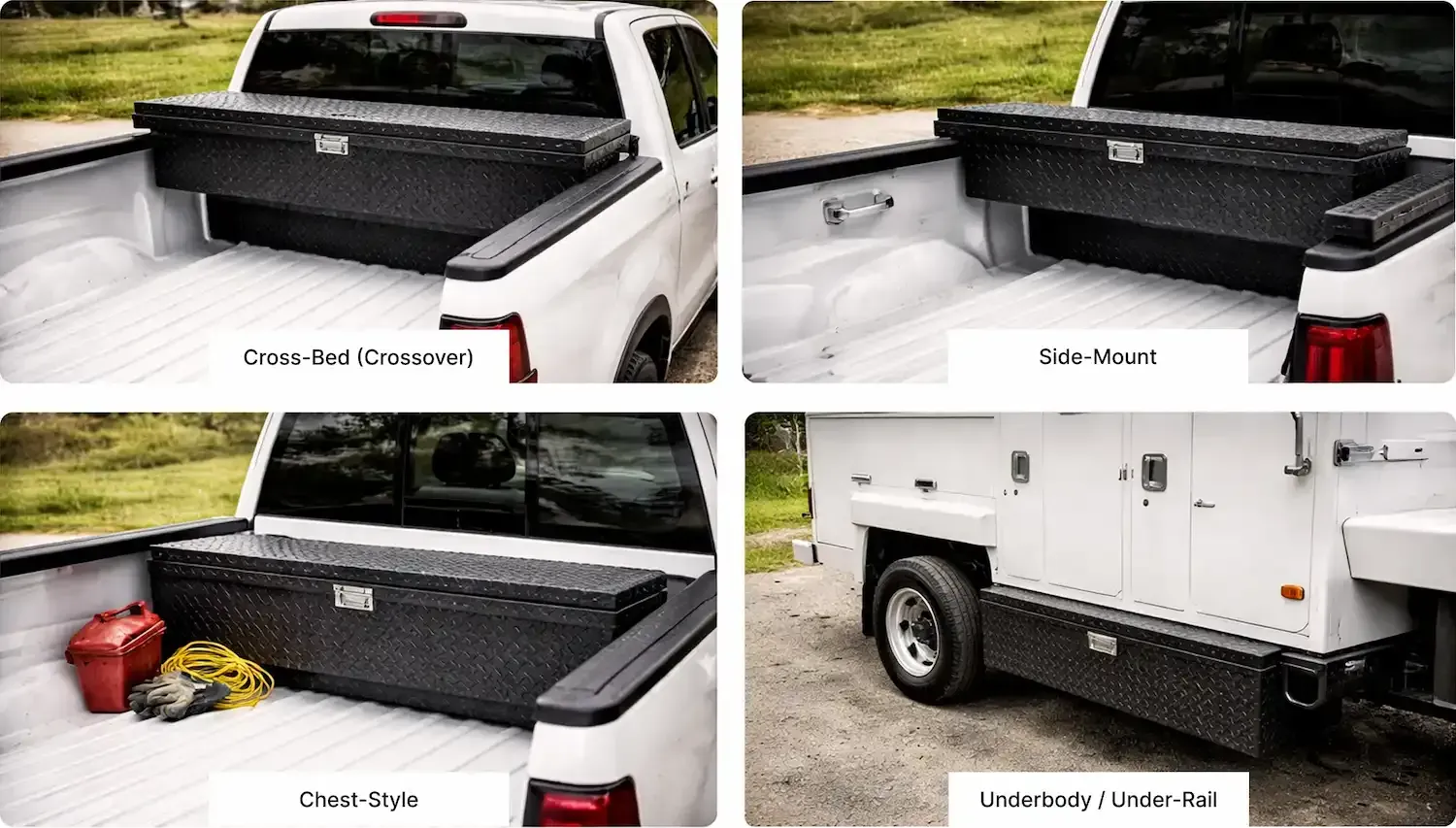
Before installation, it’s important to know where your box will sit.
Choosing the right installation type depends on how you use your truck and how much bed space you want to keep available.
| Type | Installation Position | Best For |
|---|---|---|
| Cross-Bed (Crossover) | Behind the cab, across bed rails | Everyday tools, easy access |
| Side-Mount | Along bed rails | Long tools, keeping bed space open |
| Chest-Style | On the bed floor | Heavy-duty storage |
| Underbody / Under-Rail | Beneath the truck bed | Commercial and utility trucks |
Most DIY installations focus on cross-bed tool boxes, which are the most common.
Tools and Materials Required for Installation
Before starting, gather everything you need:
- Measuring tape
- Marker
- Wrench or socket set
- Drill (if required)
- J-bolts or mounting clamps
- Rubber padding or foam strips
Most modern truck bed tool boxes, including those from Rimrock Manufacturing, are designed for no-drill or minimal-drill installation, making the process quicker and easier.
Choosing the Right Size Tool Box
Picking the right size is key for proper fit and usability.
Start with measurements:
- Truck bed width (inside rails)
- Bed length
- Rail height
- Distance from cab to lid opening
What to Consider
- Keep enough open bed space for larger cargo
- Ensure the lid opens fully without hitting the cab
- Avoid blocking rear visibility or other accessories
- Choose a size that matches your daily usage needs
Quick guide:
| Truck Bed Type | Ideal Tool Box Size |
|---|---|
| Compact Beds | 4 ft – 5 ft |
| Standard Beds | 5 ft – 6 ft |
| Long Beds | 6 ft – 8 ft |
Step-by-Step Installation Guide
| Step | What to Do | Key Tip |
|---|---|---|
| Measure | Check bed width | Be precise |
| Position | Place toolbox | Keep centered |
| Mark | Mark drill points | Use marker |
| Secure | Tighten bolts | Don’t overtighten |
| Test | Open/close lid | Ensure smooth use |
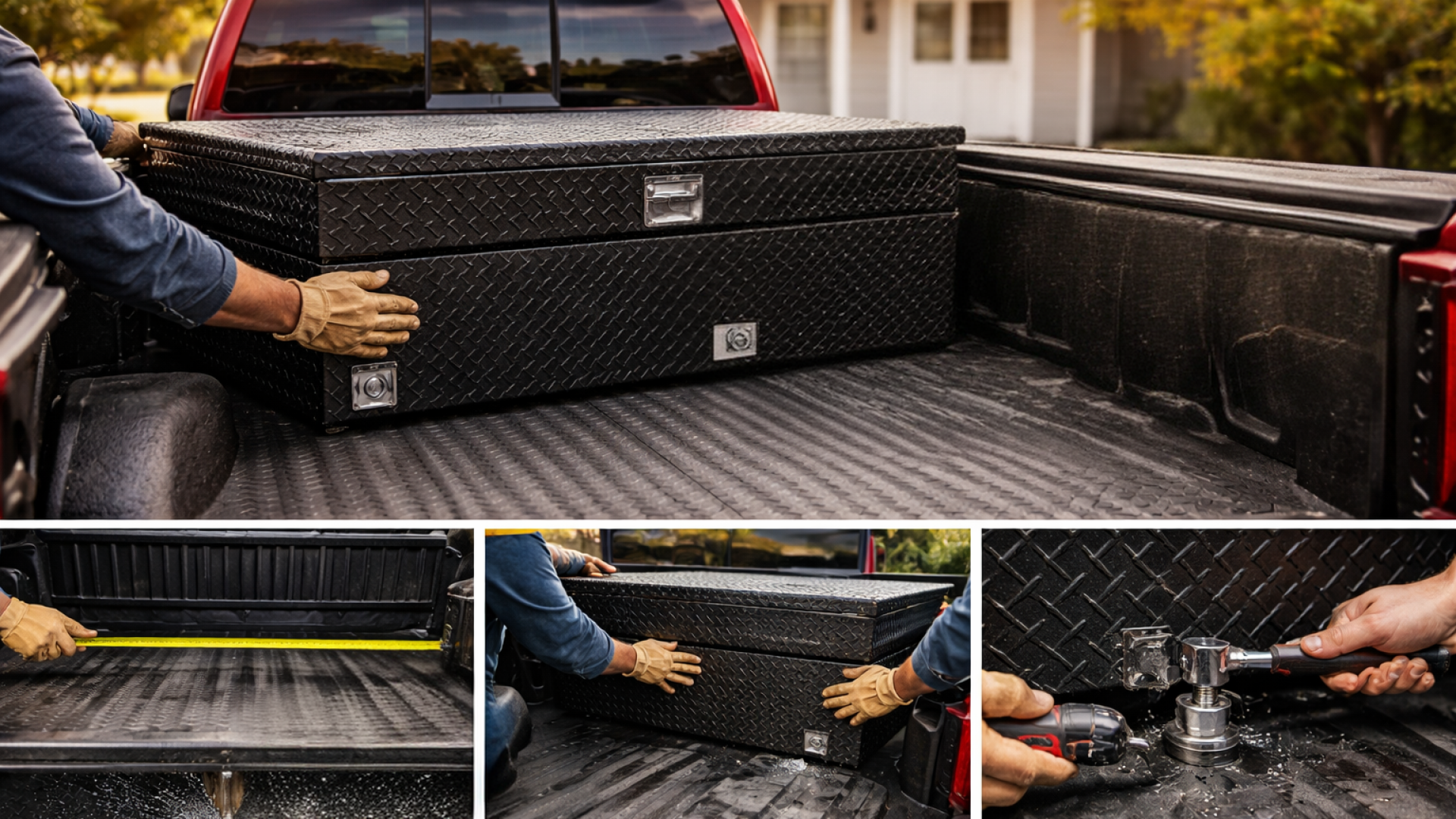
Step 1: Measure Your Truck Bed
Accurate measurements ensure proper fit and alignment.
Measure:
- Bed width (inside rails)
- Bed length
- Distance from cab
Choosing the right size ensures stability and full lid clearance.
Step 2: Position the Tool Box
Place the truck bed tool box across the bed rails, directly behind the cab.
Check for:
- Even alignment on both sides
- Adequate clearance from the cab
- Smooth lid opening
Pro Tip: Open the lid fully before mounting to confirm there’s no obstruction.
Step 3: Add Protective Padding
Place rubber or foam padding between the tool box and the truck bed rails.
Why this matters:
- Prevents scratches on your truck
- Reduces vibration and noise
- Improves grip and stability
Step 4: Mark Mounting Points
Once positioned:
- Mark the holes inside the tool box
- Ensure alignment with bed rails
Some tool boxes for trucks come with pre-drilled holes, while others may require light drilling.
Step 5: Secure the Tool Box
Use J-bolts or clamps to mount the box securely.
Installation process:
- Insert bolts into mounting holes
- Hook them under the bed rail
- Tighten evenly with a wrench
| Mounting Method | Pros | Consideration |
|---|---|---|
| J-Bolts | No drilling required | Must be tightened evenly |
| Direct Bolting | Extremely secure | Requires drilling |
| Clamps | Quick installation | May need periodic tightening |
Make sure the box is firmly secured with no movement.
Step 6: Test the Fit and Function
After installation:
- Open and close the lid multiple times
- Check lock alignment
- Ensure smooth operation
A high-quality tool box for the bed of a truck should open easily and seal tightly.
Step 7: Final Inspection
Before using your truck:
- Check all bolts and clamps
- Ensure the box is stable
- Confirm locks are working properly
- Take a short drive and recheck if needed.
How Long Does Installation Take
Installing a tool box for trucks is a quick and manageable task, even for beginners
Average Time Required
- Beginners: 30–60 minutes
- With tools ready: 15–30 minutes
- No-drill installation: Fastest option
What Affects Installation Time
- Type of mounting (J-bolts, clamps, or drilling)
- Tool availability
- Experience level
- Truck bed design
Tip: Preparing tools and reading instructions beforehand can significantly reduce installation time.
Common Installation Mistakes to Avoid
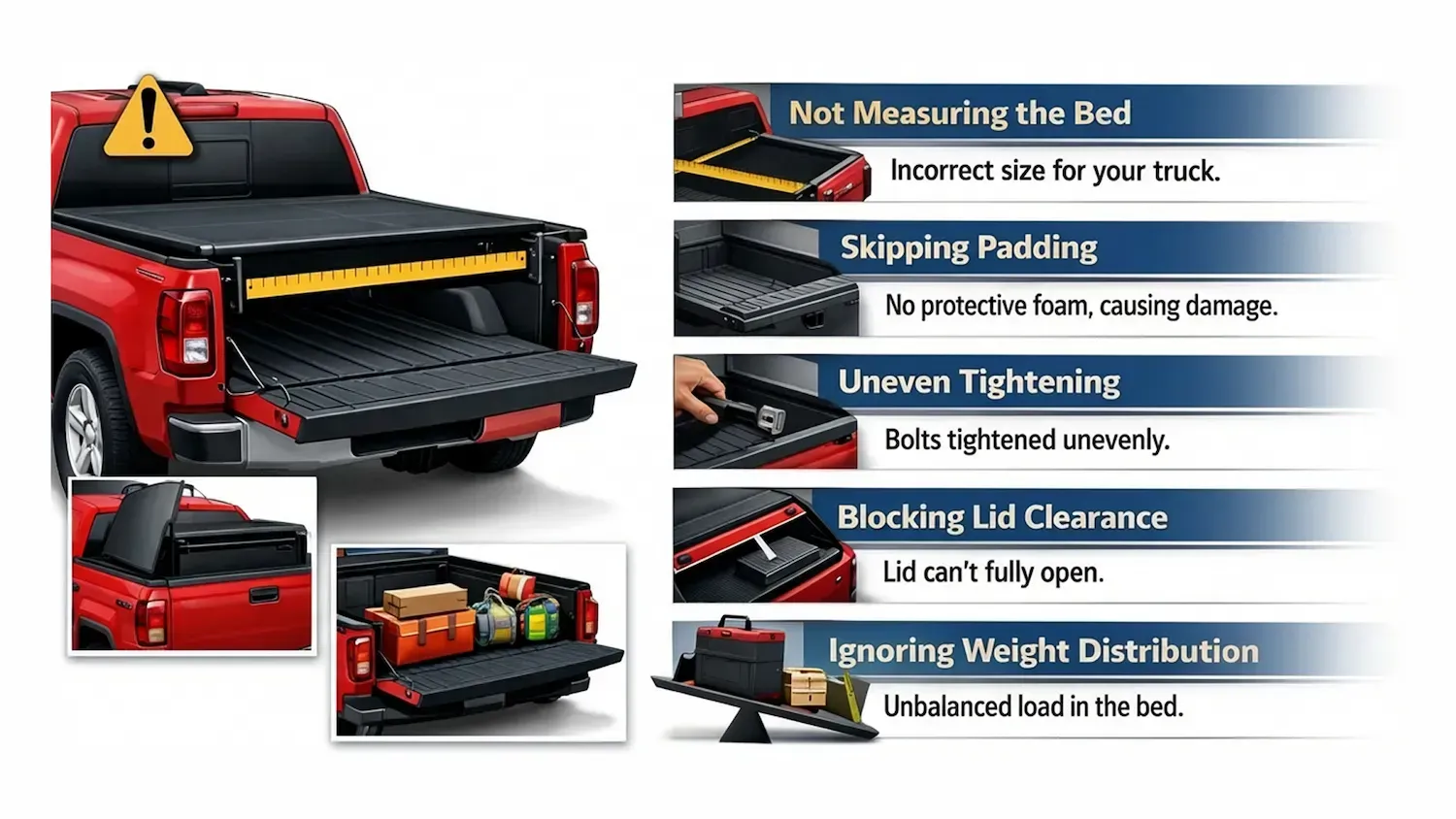
Avoiding these mistakes will save time and prevent damage:
| Mistake | Impact |
|---|---|
| Not measuring the bed | Improper fit |
| Skipping padding | Scratches and vibration |
| Uneven tightening | Box shifting over time |
| Blocking lid clearance | Limited usability |
| Ignoring weight distribution | Reduced stability |
Maintenance & Organization Tips After Installation
Once your tool box for the bed of a truck is installed, simple maintenance helps keep it working smoothly and lasting longer.
Regular Maintenance Checklist
- Clean dirt, dust, and debris regularly
- Lubricate hinges and locks for smooth operation
- Check weather seals to prevent water entry
- Inspect bolts, clamps, and mounting hardware
Why Maintenance Matters
- Prevents rust and corrosion
- Protects tools from moisture and damage
- Ensures long-term durability
- Reduces chances of loose fittings or rattling
Just a few minutes of maintenance can help you avoid costly repairs later.
Organization Tips to Maximize Space
Once installed, make the most of your truck bed tool box:
- Use dividers for organization
- Separate daily-use and occasional tools
- Add foam inserts for protection
- Label compartments for quick access
A well-organized box saves time and improves efficiency on the job.
Pro Tips for a Perfect Installation
A proper installation isn’t just about fitting the box, it’s about doing it right for long-term performance.
Expert Tips
- Install with a second person for better alignment
- Use rubber or foam padding to prevent scratches
- Ensure the tool box is centered evenly
- Tighten bolts evenly, not too tight
- Check lid movement before final tightening
Extra Tip
- Always test the lid clearance with the cab before securing the box fully
These small steps help avoid common issues and ensure a clean, secure, and professional installation.
Final Checklist Before You Hit the Road
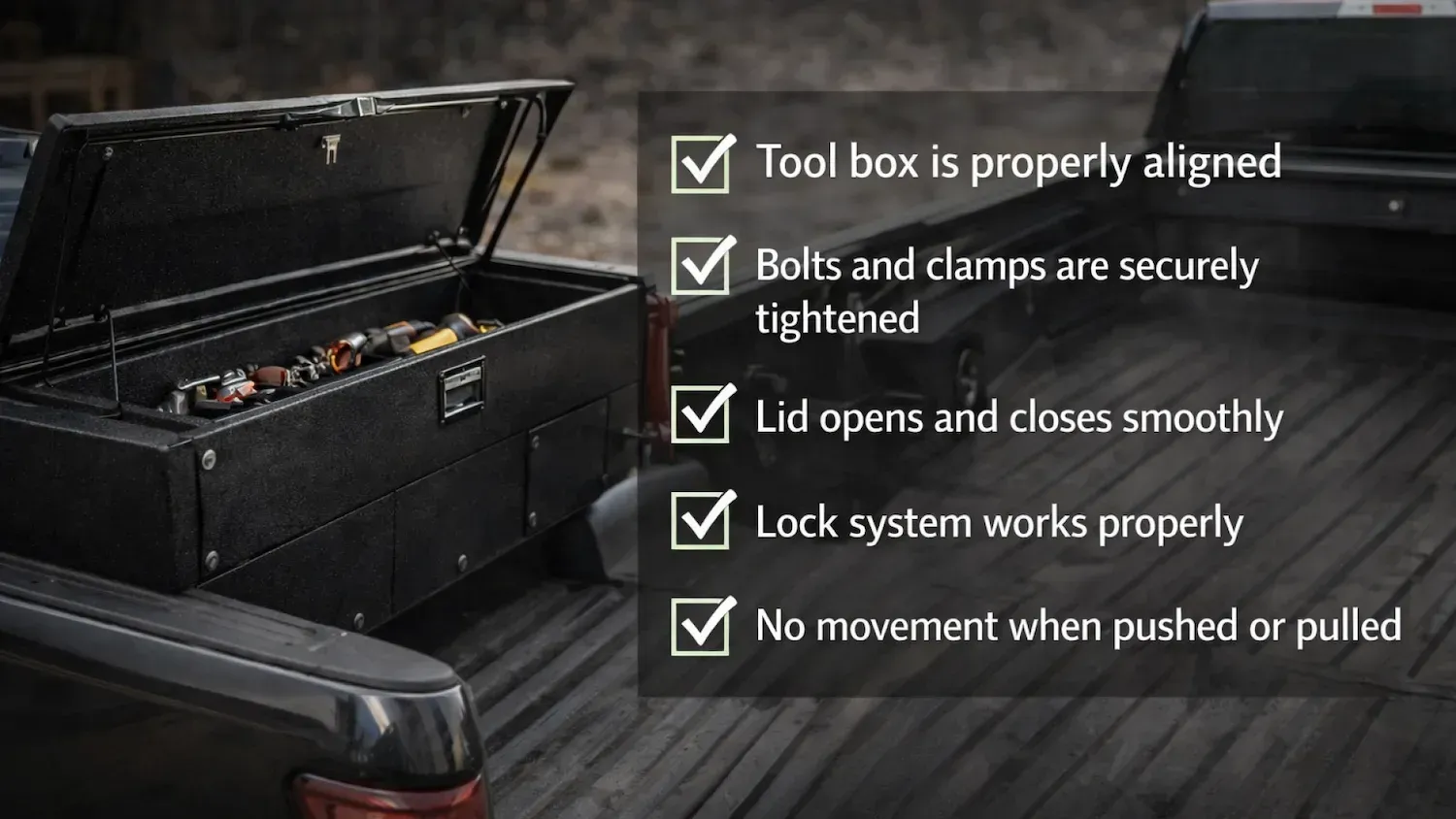
Before you consider the installation complete, do a quick final check.
Inspection Checklist
- Tool box is properly aligned
- Bolts and clamps are securely tightened
- Lid opens and closes smoothly
- Lock system works properly
- No movement when pushed or pulled
After Installation Tip
- Take a short test drive
- Recheck all fittings after driving
This final check ensures your truck bed tool box is safe, secure, and ready for daily use
Why Quality Matters in Truck Bed Tool Boxes
Installation is only part of the equation, the quality of the box itself matters just as much.
High-quality boxes offer:
- Better weather resistance
- Stronger materials (steel or aluminum)
- Secure locking systems
- Long-term durability
Rimrock Manufacturing offers rugged, heavy-duty truck bed tool boxes designed for real-world use, whether on job sites, farms, or off-road environments.
Final Thoughts
Installing a truck bed tool box is one of the most practical upgrades you can make to your truck. It improves organization, protects your tools, and enhances your overall workflow.
With the right tools, proper measurements, and careful installation, you can confidently mount a tool box for trucks and enjoy long-term benefits.
A properly installed tool box not only protects your gear but also improves safety and efficiency on the road.
When installed correctly, a tool box for the bed of a truck doesn’t just store your gear, it transforms how efficiently you work every day.
Rimrock Blog